
Problem · Cognitive load
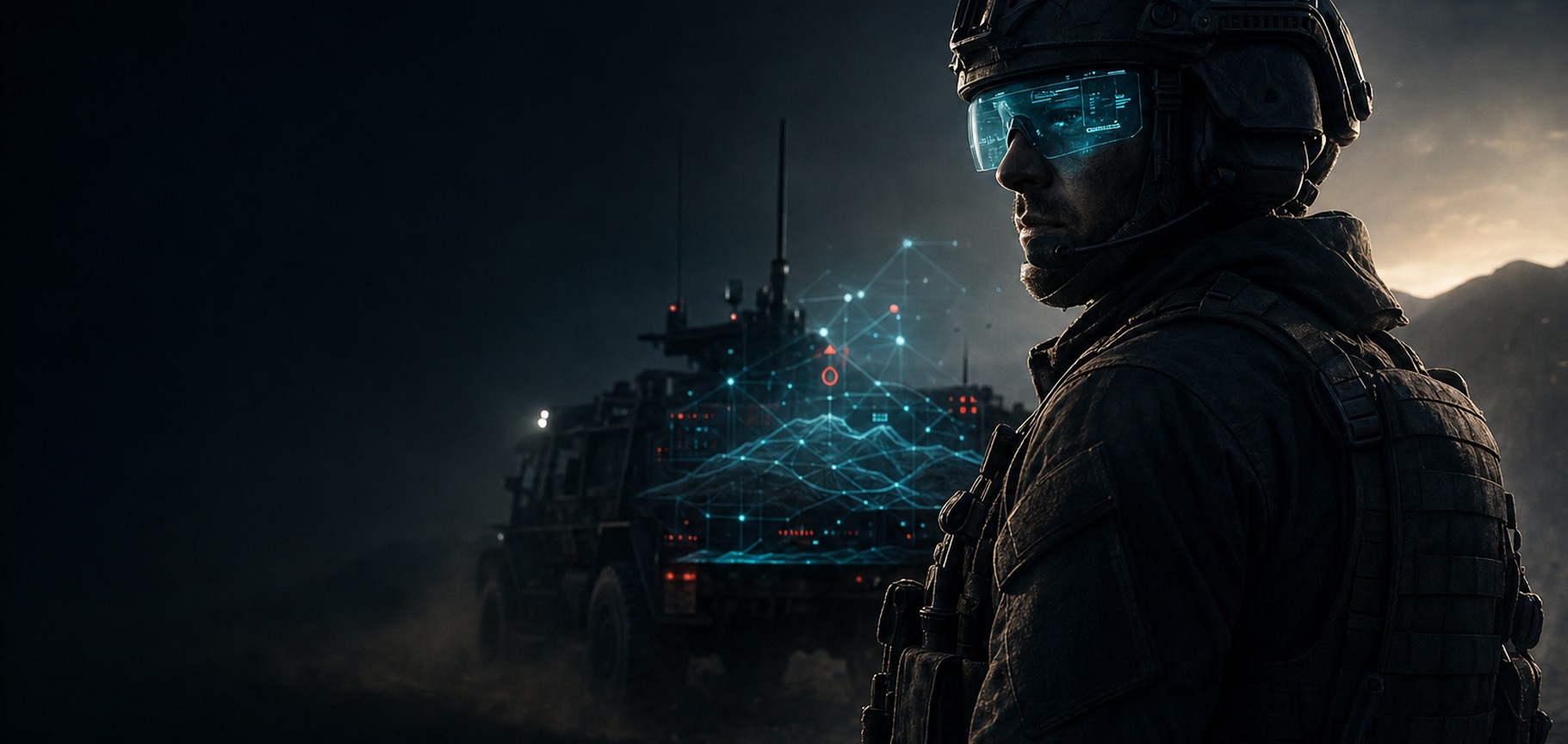
The cognitive burden on the soldier
Modern operations degrade decision-making capacity long before they degrade equipment. Eight recurring factors drive that cognitive burden, and each is measurable, addressable and traceable to a design requirement in our architecture.
- Information overload — Drones, sensors and command nets push more data than a soldier can process in real time, producing decision fatigue and slower reaction times.
- Environmental stressors — Extreme temperature, altitude and noise degrade cognitive function while complex tasks still have to be completed.
- Physical exhaustion — Extended vigilance, load carriage and exertion without rest raise error rates and slow problem solving.
- Psychological stress — Threat of injury, exposure to trauma and moral dilemmas add anxiety and long-term cognitive load.
- Technological complexity — Advanced equipment demands higher training and sustained cognitive engagement, often under fire.
- Multitasking — Navigating, communicating and engaging simultaneously drives cognitive overload.
- Sleep deprivation — Prolonged operations impair attention, memory and judgement.
- Chemical exposure — Intentional or environmental exposure affects cognitive performance and brain health.